The Indomitable Lions of 1990: The Team That Made Africa Dream
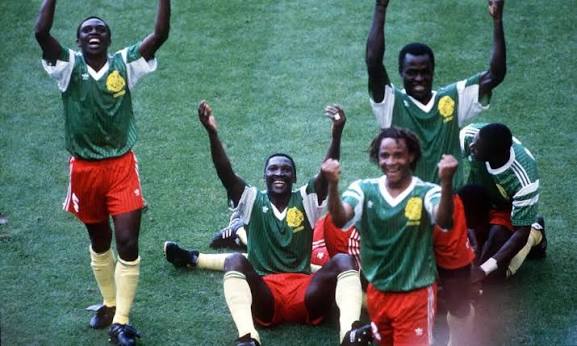
The Most Important African Football Team in History
Bold claim. But difficult to argue against. The Cameroon squad that arrived at Italia 90 changed the trajectory of African football more profoundly than any team before or since. They were the catalyst — the proof of concept — that African football could compete, entertain, and succeed on the grandest stage.
They were also, it must be said, wonderfully chaotic. They received more red cards in a single tournament than any team in World Cup history. They played with a fervour that bordered on recklessness. They were magnificent.
The Squad
The architect of Cameroon's 1990 side was Soviet coach Valery Nepomnyashchy, who had been appointed with some surprise and embraced with some scepticism. He inherited a talented but volatile group of players: Thomas N'Kono in goal, Bertin Ebwelle and Victor N'Dip in defence, Emile M'Bouh and Louis-Paul Mfédé in midfield, and a forward line that included François Omam-Biyik — who headed home the opening goal against Argentina.
And then there was Roger Milla. Thirty-eight years old. Summoned from semi-retirement. A force of nature off the bench.
The Tournament
Cameroon opened by stunning Argentina 1–0, despite finishing with nine men. They beat Romania. They beat Colombia in extra time, with Milla scoring twice. They faced England in the quarter-final and led 2–1 before Gary Lineker's penalty — and then another — sent England through. It ended 3–2 after extra time.
They had gone from African outsiders to the most talked-about team of the tournament. In 120 minutes, they had gone from being on the brink of history to being the most admired near-misses in World Cup history.
The Legacy
Cameroon's 1990 run directly led to Africa receiving more World Cup slots. It transformed the global perception of African football. Every player who grew up in Africa in the 1990s — Drogba, Eto'o, Dembélé, Yaya Touré — grew up with the Indomitable Lions as a reference point. The ripple effects of that tournament are still felt at every World Cup that follows.